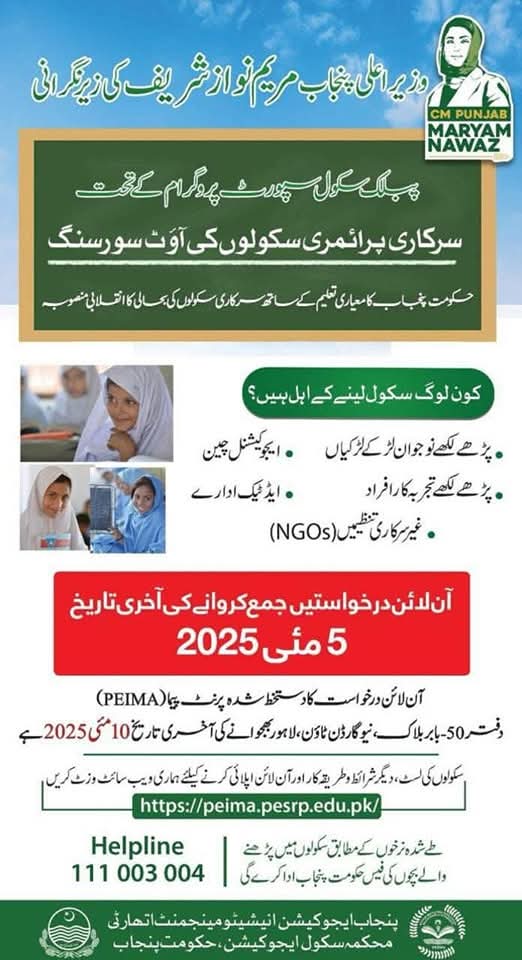
In recent years, governments across the globe, particularly in developing countries, have increasingly explored outsourcing models in the education sector to improve quality and efficiency. One such model is the outsourcing of government primary schools to private or non-governmental organizations (NGOs). This approach, while controversial, aims to address systemic challenges in public education systems, including poor infrastructure, teacher absenteeism, and declining learning outcomes. But is outsourcing the solution we need, or does it risk undermining public education altogether?
Understanding School Outsourcing
Outsourcing in education refers to the practice of transferring the management and operation of public schools to external organizations, including private companies, NGOs, or charitable trusts. In this model, the government typically retains ownership of the school infrastructure and provides funding, while the outsourced agency takes responsibility for day-to-day operations, academic performance, staffing, and sometimes even curriculum implementation.
The primary objective is to improve learning outcomes and school management through innovation, accountability, and efficiency—qualities often associated with private-sector management.
Why Outsource Government Primary Schools?
There are several reasons why governments are considering or implementing outsourcing in primary education:
- Poor Learning Outcomes: Despite increased enrolment in government schools, learning levels remain alarmingly low. Many children in early grades struggle with basic reading and arithmetic.
- Teacher Absenteeism and Shortages: In several regions, government schools suffer from a lack of qualified teachers, and high absenteeism rates among existing staff further hamper education delivery.
- Infrastructure Deficiencies: Many government schools lack basic facilities such as clean drinking water, functional toilets, electricity, and adequate classrooms.
- Administrative Burdens: Education departments often face challenges in monitoring thousands of schools, leading to inefficiencies and weak accountability.
- Resource Optimization: Outsourcing allows governments to leverage the experience and efficiency of non-state actors without the need for massive internal restructuring.
Models of Outsourcing
There are various models under which government primary schools can be outsourced:
- Public-Private Partnerships (PPPs): In this model, a private entity manages a public school under a formal agreement with performance benchmarks.
- Charter School System: Adopted in some countries like the United States, these schools are publicly funded but operated by private groups under a charter agreement.
- Adopt-a-School Programs: NGOs or private firms adopt and manage specific schools, often in partnership with local education departments.
- School Management Contracts: External agencies are contracted to run schools, with clear deliverables and performance-based incentives.
Benefits of Outsourcing
- Improved Accountability: Outsourced schools are often bound by performance-based contracts, which help drive better results.
- Innovation in Teaching Methods: NGOs and private players often bring innovative pedagogies and technology-enhanced learning.
- Professional Management: Non-state actors can introduce systems for monitoring, staff training, and school governance that are lacking in government-run institutions.
- Cost Efficiency: Outsourcing can sometimes reduce costs by streamlining operations and minimizing bureaucratic inefficiencies.
- Community Engagement: In some models, the involvement of local organizations fosters greater community participation and ownership of schools.
Challenges and Criticisms
While the benefits are notable, school outsourcing is not without criticism and challenges:
- Equity Concerns: There is a fear that outsourcing may lead to the exclusion of disadvantaged children if private operators prioritize performance metrics over inclusivity.
- Commercialization of Education: Critics argue that education is a public good and should not be subject to market forces or profit motives.
- Lack of Oversight: Monitoring and evaluating outsourced schools require robust systems, which many governments currently lack.
- Sustainability Issues: Outsourced models often rely heavily on donor funding or short-term contracts, raising concerns about long-term viability.
- Teacher Job Security: Outsourcing can create uncertainty among government teachers about job roles, transfers, and employment conditions.
Case Studies and Experiences
States like Rajasthan, Andhra Pradesh, and Punjab in India have experimented with different outsourcing models. In Rajasthan, for instance, low-performing government schools were handed over to NGOs under a performance-based framework. Preliminary reports showed improvement in learning levels, student attendance, and teacher presence.
However, these models also faced resistance from teacher unions and education activists, who questioned the transparency of the process and the long-term implications for the public education system.
The Way Forward
Outsourcing, when implemented thoughtfully and transparently, can be a powerful tool to revitalize primary education. However, it should not be seen as a silver bullet. Governments must:
- Establish clear regulatory frameworks and performance metrics.
- Ensure inclusivity and protect the rights of marginalized children.
- Foster collaboration, not competition, between public and private players.
- Maintain ownership and oversight to safeguard public interest.
Furthermore, outsourcing should complement, not replace, efforts to strengthen the core public education system. Investments in teacher training, infrastructure, curriculum reform, and community involvement remain crucial.
Conclusion
The outsourcing of government primary schools presents both opportunities and risks. It can lead to improved outcomes, innovation, and accountability, but it also raises concerns about equity, sustainability, and the role of the state. For it to succeed, it must be part of a broader education reform strategy that prioritizes the needs of children and communities over profits and political interests. Education, after all, is not just a service—it is a fundamental right.
Let me know if you’d like a version in a different tone (e.g., for a speech, policy brief, or blog) or focused on a specific country or region.

 https://wordpress.com/home/zinblogs.com
Leave a comment